

Orange Season
Oranges in season in Australia. Month-by-month availability by state, peak supply windows, growing regions and varieties.
When are Oranges in Season?
Oranges are in season in Australia from late autumn through winter and into early spring. Navel oranges run from around May to November, with peak supply in June, July and August when fresh fruit is coming out of the Murray Valley, the Riverina and South Australia's Riverland. Valencia oranges follow on in late spring and summer, keeping fresh Australian oranges on shelves from November through to February. The main gap is March and April. Good timing to raid a mandarin tree instead.
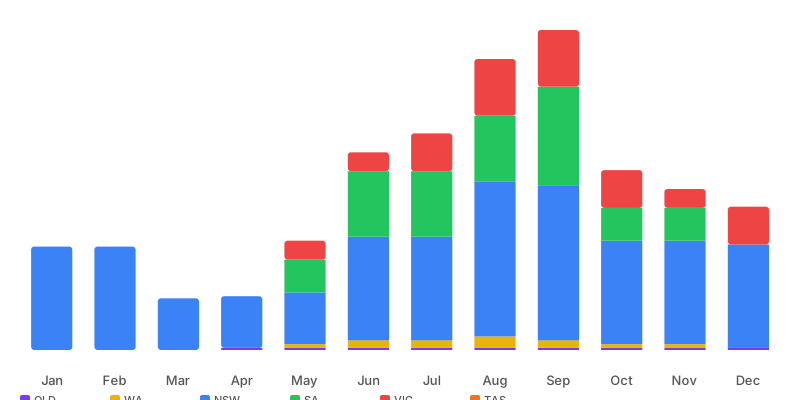
When is Orange Season in Australia?
Oranges are in season across winter and spring in Australia, with peak supply from June to September.
Orange orchards take four to six years from planting to commercial crop. Most trees are grafted onto rootstocks selected for vigour, soil tolerance and disease resistance. Rootstock incompatibilities can cause trees to fail at ten to fifteen years, as early Navelina plantings on Swingle Citrumelo rootstock discovered, per Citrus Australia. Oranges need warm days to develop sugars and cool nights to develop skin colour, which is why the Murray Valley and Riverland's continental temperature swings produce reliably coloured fruit. Queensland and the NT harvest earlier, giving the national industry a longer overall window, as Citrus Australia notes.
Orange Availability by Season
Orange Varieties
Navel oranges cover May to November and are the default fresh-eating option. Valencia takes over in summer for juicing. Blood oranges share the navel window but are grown in much smaller volumes. Cara Cara is the one navel that gets its own retail label, picked out for its pink flesh.
Orange Varieties Through the Year
Navel Orange Season
Navel oranges are Australia's most popular fresh-eating orange, in season May to November with peak supply June to October, per Citrus Australia. They're grown mainly in the Murray Valley, the Riverina and South Australia's Riverland. They are seedless, easy to peel and reliably sweet. The standard commercial variety is Washington Navel, but growers have been shifting toward earlier-ripening Navelina sports. Navelina 7.5 from Spain is most widely planted and colours up four to six weeks ahead of Washington. Citrus Australia reported newer selections M7 (a limb sport from Kenley, Victoria) and FJ (found in Leeton, NSW) reaching full colour by mid-May in 2019 trials. At retail, all navels are sold under a single label, except Cara Cara, which is called out separately for its distinctive pink flesh.
Valencia Orange Season
Valencia oranges are Australia's summer orange, available November to February per Citrus Australia, carrying fresh Australian oranges through the warmer months. Thinner-skinned and higher in juice than navels, they're the industry's preferred juicing variety. The Murrumbidgee Irrigation Area handles the bulk of juice-orange supply for Australia's major processors. Sanderson et al. (Scientia Horticulturae, 2014) lists Australian varieties including Benyenda and McMahon (early, seedless) and Berri, which holds well on the tree late in the season. Unlike navels, Valencias often have a few seeds and can re-green at the stem end as summer temperatures warm. The fruit is still ripe. The colour just fades back toward green.
Blood Orange Season
Blood oranges share the same season window as navels (broadly June to October) but grow in much smaller volumes and are more easily found at specialist greengrocers and farmers markets than in the main chains. The deep-red to crimson flesh comes from anthocyanin pigments that develop with cool nights during ripening, which is why they colour best in the colder inland growing districts. July and August is when you're most likely to see them at their best. Flavour is richer and slightly more complex than a navel, with a hint of berry in some seasons.
Cara Cara Navel Season
Cara Cara is the one navel variety that gets its own retail label, because the pink-to-salmon flesh is distinctive enough that shoppers notice, as ABC Everyday notes. The colour comes from lycopene rather than anthocyanins. Season broadly mirrors standard navels (May to October), but planting volumes are smaller, so supply can be patchy. Flavour is sweeter and lower in acidity than a Washington Navel, with less of the slight bitterness standard navels can show from long storage. Worth picking up in mid-winter when you see them.
Where do Oranges Come From in Australia?
South Australia's River Murray regions became the industry's heartland from the 1890s. By 1912 towns like Renmark, Berri and Waikerie were recognised for thin-skinned, high-quality export fruit. PIRSA puts SA's citrus area at around 5,405 hectares (approximately 20% of the national total) as at 2019. The Riverland's pest-free area status for fruit fly opened export markets other regions couldn't match. NSW is the other major producing state, with citrus in the Riverina around Griffith, Leeton and Hillston, and the Murray Valley. The Murrumbidgee Irrigation Area is the heart of Valencia juice-orange growing, per DPI NSW. Queensland (harvest starts from March), WA and the NT also have commercial growing regions, according to Citrus Australia.
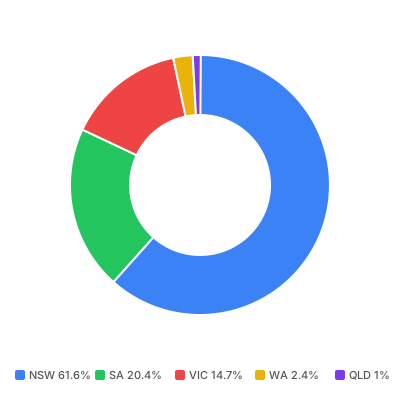
Orange Production in Australia
According to Hort Innovation, Australia's citrus industry has 27,000 hectares across five states and one territory, with production growing at an average 12% a year between 2012/13 and 2019/20. In 2019/20, 284,667 tonnes were exported, 276,744 tonnes went to the domestic fresh market and 206,522 tonnes to processing. ABARES/DAFF notes the combined orange and mandarin export value more than doubled from $235 million in 2009–10 to $520 million in 2019–20, with Australia ranking as the world's largest exporter of oranges to ASEAN in 2019. Our southern hemisphere season puts fresh fruit on Asian shelves during the northern hemisphere's off-season. The juicing segment (primarily Valencia) has been under pressure. In 2023, ABC Rural reported processor contract prices in the Murrumbidgee Irrigation Area below the cost of production, with the industry body warning the juicing sector was "shrinking to the point of collapse."