

Parsnip Season
Parsnips in season in Australia. Month-by-month availability by state, peak supply windows, growing regions and varieties.
When are Parsnips in Season?
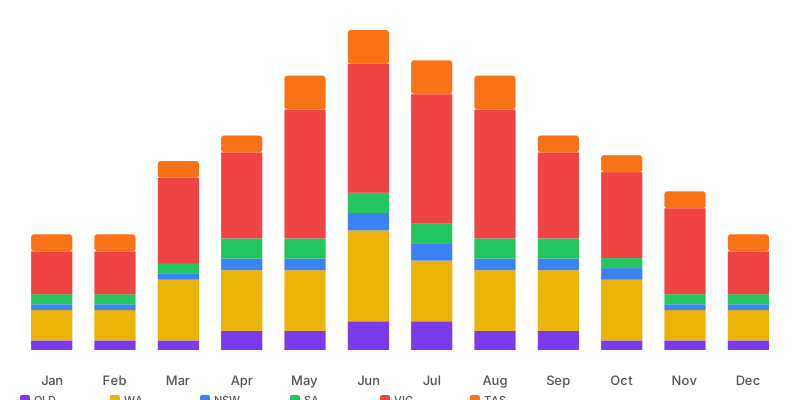
Parsnips are at their best in Australia between May and August, when winter temperatures push supply to its peak and the cold genuinely improves the vegetable. They're available year-round in the cooler states, but the sweet spot is mid-winter, June and July, when Victorian crops are in full swing and you'll get the most flavour for your money.
When is Parsnip Season in Australia?
Parsnips are in season across winter and autumn in Australia, with peak supply from April to October.
Parsnips (Pastinaca sativa) need deep, loose, well-drained soil and cool temperatures (optimum growth between 16 and 20°C) and take 3.5 to 6 months from sowing to harvest, one of the longer lead times of any common vegetable, per AUSVEG/WA DPIRD. At around 0 to 2°C near harvest, starch converts to sugars, producing noticeably sweeter, more complex flavour, which is why parsnips harvested after a frost taste markedly better than those pulled in warmer conditions. They're direct-seeded (seedlings don't transplant well) and germination can take up to four weeks in cool conditions. Seed viability is only around a year, so growers buy fresh seed each season, as ABC Gardening Australia notes.
Parsnip Availability by Season
Where do Parsnips Come From in Australia?
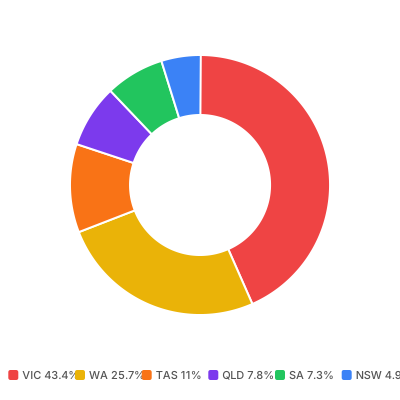
Victoria leads at around 43% of national output in 2024/25 per the ABS, down from above 80% in older data as WA and Tasmania have grown their contribution, per HAL VG05045 (2008). Western Australia is now second at around 26%, concentrated in the Perth Metro area and south-west. Tasmania contributes about 11%, Queensland 8%, South Australia 7% and NSW the remainder. The main commercial varieties in WA are Hollow Crown, Melbourne Whiteskin and Yatesnip No. 1, all open-pollinated, with very little hybrid variety development in the Australian market, per AUSVEG/WA DPIRD. The variety Tusk has shown canker resistance in Victorian trials, reducing disease losses compared to older seed stocks, per HAL VG05045.
Parsnip Production in Australia
The ABS puts Australian parsnip production at 3,553 tonnes worth $12.3 million at the farm gate in 2024/25. Annual tonnage has hovered between 3,300 and 3,600 tonnes since 2014/15, with value climbing from around $9 million to a peak of $14.4 million in 2022/23 before softening. Zero fresh exports and zero fresh imports were recorded in both 2022/23 and 2023/24. About as self-contained as a vegetable industry gets. Tasmania has seen some expansion. In 2020, a former New Zealand grower purchased a farm near Sassafras in north-west Tasmania specifically to supply the domestic market via major supermarkets and smaller chains, per ABC Tasmanian Country Hour (2020).