

Tomato Season
Tomatoes in season in Australia. Month-by-month availability by state, peak supply windows, growing regions and varieties.
When are Tomatoes in Season?
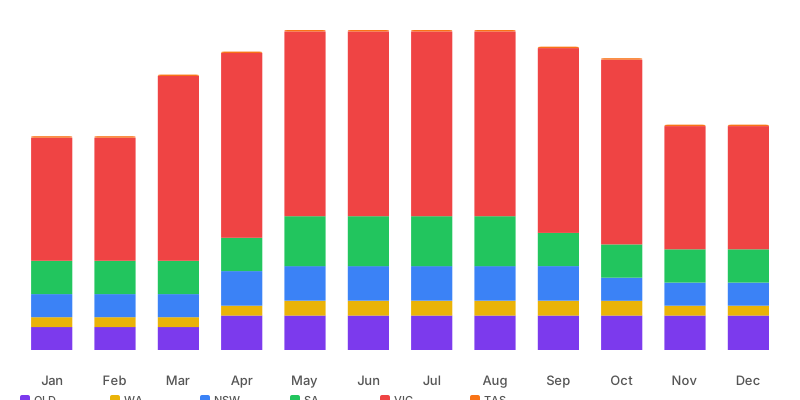
Tomatoes are available in Australia year-round, but the best-value outdoor-grown fruit comes through from late autumn to early spring when Queensland and Victoria are in full supply. If you're shopping in May, June or July you're in the sweet spot. That's when North Queensland's winter crop is running hard and southern glasshouse operations are producing steadily.
When is Tomato Season in Australia?
Tomatoes are in season year-round in Australia, with peak supply in winter.
Tomatoes need a frost-free growing period of roughly 60 to 90 days from transplanting to first harvest. Most commercial growers start from seedlings planted into prepared beds or hydroponic systems. Glasshouses and polyhouses now account for the majority of fresh tomatoes in several states. NSW DPI puts the figure at about 52% in NSW, with similar or higher proportions in SA and Victoria. Protected cropping runs almost year-round, adjusting light and temperature to extend the harvest cycle. Field-grown tomatoes take advantage of warm summer temperatures but have a shorter picking window and higher weather risk.
Tomato Availability by Season
Tomato Varieties
The four main commercial types divide mainly on growing method and intended use. Cherry and truss tomatoes are almost exclusively glasshouse-grown and available year-round, while field (round) and Roma types rely more on outdoor winter crops from North Queensland and have a more defined seasonal peak.
Tomato Varieties Through the Year
Cherry/Grape Tomato Season
Cherry and grape tomatoes are at high supply every month of the year, grown predominantly in glasshouses so supply barely dips in winter. Cherry types are round and bite-sized. Grape tomatoes are oblong with firmer flesh and lower water content. North Queensland's Bowen-Gumlu area produces significant outdoor volumes from May to November, per Health and Wellbeing Queensland. According to Wikipedia, Israeli agricultural researchers at the Hebrew University developed shelf-life-extended cultivars in the 1970s that shaped the Sungold and Sweet Million-style hybrids now dominating Australian retail.
Field (Round) Tomato Season
Field tomatoes (the standard round supermarket tomato) peak in supply from April through to November. Grown both outdoors and in protected systems, quality varies more than any other category. The best come from Queensland's winter growing areas and from Victorian and South Australian glasshouse operations in cooler months. ABC Gardening Australia notes that Queensland growers use the cooler winter dry season to produce field tomatoes when southern states can't match them on cost. In southern states, varieties like Grosse Lisse remain popular at specialist growers and in home gardens through the shorter outdoor growing window.
Truss/Vine-ripened Tomato Season
Truss tomatoes, sold as a cluster still attached to the vine, sit at the premium end of the fresh market and run at high supply all year. Almost all are grown in temperature-controlled glasshouses and harvested once showing good colour, rather than being gassed after picking. The vine connection slows moisture loss and maintains aroma during retail. They're almost exclusively modern indeterminate hybrids selected for uniform size, thick walls and long vine shelf life. South Australian and Victorian glasshouse operations dominate this category, which is why the 2024 tomato brown rugose virus outbreak at a major SA facility had an outsized effect on truss tomato supply and price, as ABC News reported.
Roma/Plum Tomato Season
Roma tomatoes are egg-shaped, low-moisture plum varieties that show up in supermarkets year-round, though in smaller volumes than round or cherry types. The standard Roma VF cultivar was developed by the USDA's Agricultural Research Service in the 1950s, per Wikipedia, and the determinate growth habit (most fruit sets at once) suits concentrated harvest windows. In Australia, Romas are grown in all mainland states but remain a niche category. Their dense, low-seed flesh makes them the default for sauce and paste, and a significant share goes to food service rather than supermarket shelves. Best price is usually April to October when Queensland's winter field crop is running.
Where do Tomatoes Come From in Australia?
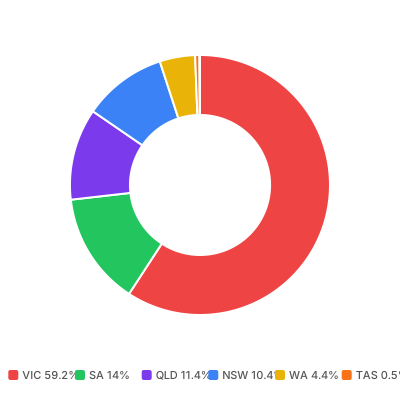
Tomatoes reached Australia with European settlement and have been a commercial crop since the late 1800s. Processing tomatoes (grown for canning and paste) established early in Victoria and NSW. Today, according to the ABS, Victoria accounts for around 59% of national production through processing tomatoes in the Goulburn Valley and Sunraysia alongside glasshouse fresh operations. SA contributes about 14%, Queensland 11.4% and NSW 10.4%. Queensland's share is almost entirely fresh-market. Health and Wellbeing Queensland notes that North Queensland grows almost 90% of the state's tomatoes during the winter harvest between May and November, with the Bowen and Gumlu region producing over 40,000 tonnes a year. WA and Tasmania make up the remaining 4.4% and 0.5% respectively.
Tomato Production in Australia
According to the ABS, Australian tomato production reached 438,000 tonnes worth $599.9 million in 2023/24, a substantial recovery from 321,736 tonnes in 2022/23, and was tracking at around 433,000 tonnes valued at $639 million in 2024/25. Victoria dominates at roughly 59% of national output, driven by processing tomatoes in the Murray-Darling basin and significant glasshouse operations near Melbourne. The industry had a serious scare in late 2024 when tomato brown rugose virus was confirmed in Australia for the first time at a large glasshouse north of Adelaide. ABC News reported Perfection Fresh was forced to destroy over a million plants at its 43-hectare facility, with losses in the tens of millions. The virus had been spreading in Europe, the Middle East and North America for a decade. Eradication failed overseas, and the industry has shifted to management protocols.