

Blueberry Season
Blueberries in season in Australia. Month-by-month availability by state, peak supply windows, growing regions and varieties.
When are Blueberries in Season?
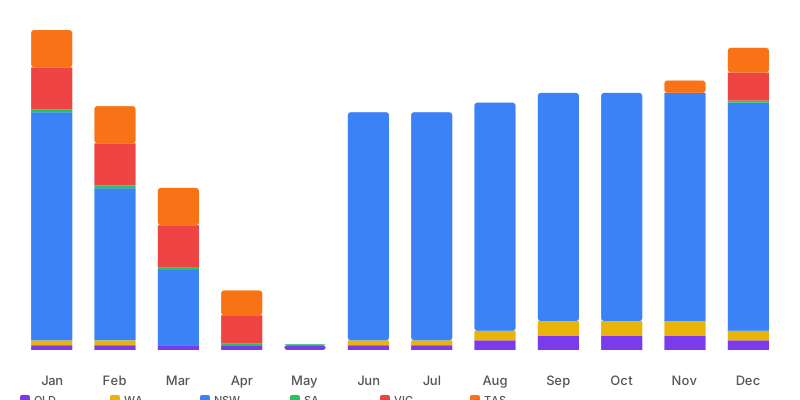
Blueberries are in season in Australia for much of the year, with peak supply running from June through to February. The main harvest on NSW's mid-north coast kicks off in June and runs through to October, then summer varieties on the same farms come back on from mid-December. Victoria and Tasmania add fruit from December to March, while Queensland and WA round out the edges of the season earlier in spring.
When is Blueberry Season in Australia?
Blueberries are in season year-round in Australia, with peak supply in summer.
Blueberries (Vaccinium spp.) need acidic, well-drained soil with a pH of 4.5 to 5.5, respond well to deep mulch and consistent irrigation, and are hand-picked from shrubs typically under two metres tall. Much of the northern NSW production runs under plastic tunnels or netting, as MADEC Harvest Trail describes. According to Berries Australia, the three commercial types have very different chilling needs. Southern Highbush needs only 250 to 600 chill hours (suited to warmer northern regions, plants live ~10 years). Northern Highbush needs 750 to 1,000 chill hours (suited to Victoria, Tasmania and southern NSW, plants can live up to 30 years). Rabbiteye is low-chill and late-season, grown on the warmer fringes of blueberry country.
Blueberry Availability by Season
Where do Blueberries Come From in Australia?
Blueberries are native to North America. Early planting attempts in Australia in the 1950s and 1960s failed. Victoria's growers had more success in the 1970s and the first commercial crop was harvested there in 1974. As MADEC Harvest Trail records, in the early 1980s grower Ridley Bell moved from Victoria to the Northern Rivers region of NSW and set up a breeding program to develop Australian-hardy cultivars at Lindendale in the Richmond Valley, which is still running today. By 2004 the Northern Rivers region alone produced over 75% of the Australian crop, mainly from three large farms, according to Berries Australia. The Australian Blueberry Growers' Association merged into the broader Berries Australia body in 2019, alongside strawberry, raspberry and blackberry growers.
Blueberry Production in Australia
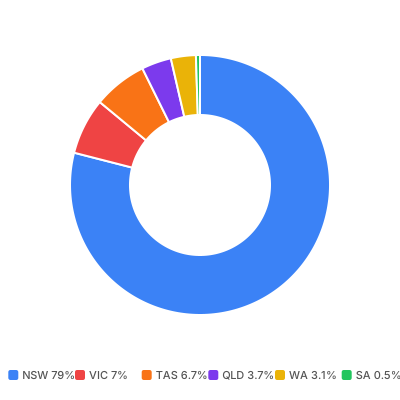
Australian blueberry production grew from fewer than 2,500 tonnes worth around $24 million in 2004 to 28,382 tonnes worth $532 million in 2024/25, with over 95% consumed domestically, according to Berries Australia and the Hort Innovation Statistics Handbook. ABC News reports that more than half of Australian households now regularly buy blueberries and annual per-capita consumption has reached around 1 kilogram. NSW accounts for about 79% of national production, concentrated on the mid-north coast from Macksville to the Queensland border (Woolgoolga, Clarence Valley, Richmond Valley), with major operators including the Oz Group cooperative and Costa's Berry Exchange alongside hundreds of smaller farms. In early 2026, the NSW Food Authority introduced new on-farm requirements for growers managing two or more hectares and licences for packing operations.