
Papaya Season
Papaya in season in Australia. Month-by-month availability by state, peak supply windows, growing regions and varieties.
When is Papaya in Season?
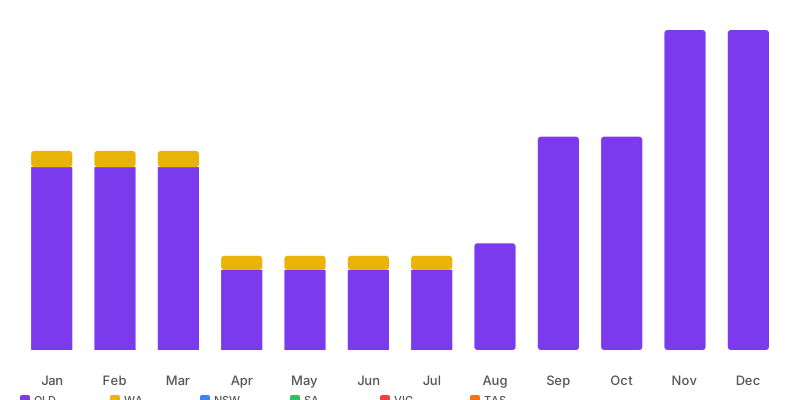
Red papaya is available year-round in Australia, with peak supply from November through to March when Queensland's North Far North production hits its highest volumes. Supply never really drops to zero. The crop fruits continuously from established trees, but late autumn and winter months see a noticeable dip as Queensland output eases and the wet tropics settle between flush cycles.
When is Papaya Season in Australia?
Papaya is in season across spring and summer in Australia, with peak supply from September to March.
Papaya is unlike almost every other commercial fruit tree in Australia. It bears within nine to twelve months of planting and fruits continuously for two to three years before growers pull the block and replant. As one Mareeba grower told ABC Gardening Australia, it's like a dairy on a tree. Once it starts, it doesn't stop. Commercial trees grow on raised mounds to improve drainage and reduce fungal rots. They're shallow-rooted and quick to topple in strong winds, which reinforces the short replanting cycle. Bee Aware notes Australian commercial varieties are mostly gynodioecious, meaning a single tree can fruit without a separate male. Fruit is harvested at first sign of colour change and ripens off the tree. Unlike apples or pears, there is no controlled-atmosphere storage, so what you buy is relatively fresh crop, per the NT Government's growing guide.
Papaya Availability by Season
Where does Papaya Come From in Australia?
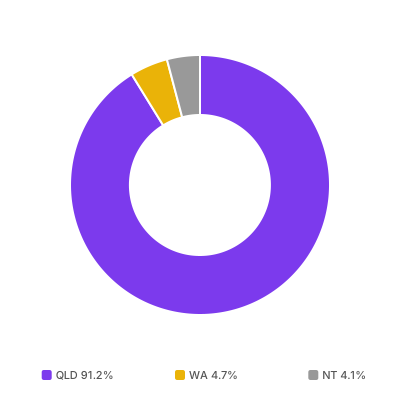
Papaya (Carica papaya) originated in Mexico and Central America and spread to tropical regions worldwide from the 16th century. The industry's shift from yellow-fleshed dioecious pawpaw to red-fleshed hermaphrodite papaya happened over the last two to three decades. More than 90% of commercial production in North Queensland is now red-fleshed. ABC Gardening Australia explains that red varieties don't carry the sulphur-compound aftertaste of older yellow types, which gave the whole fruit a bad reputation with many shoppers. Australian growers mainly grow RB1, RB2 and Skybury, per Acta Horticulturae (2017). Griffith University's papaya breeding program, led by Chat Kanchana-udomkan, is working to identify the flavour compounds that make a papaya taste good and breed those traits into next-generation cultivars.