
Pawpaw Season
Pawpaw in season in Australia. Month-by-month availability by state, peak supply windows, growing regions and varieties.
When is Pawpaw in Season?
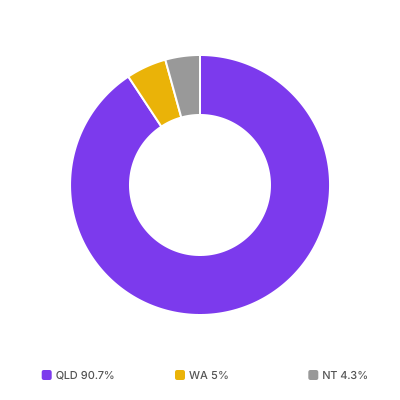
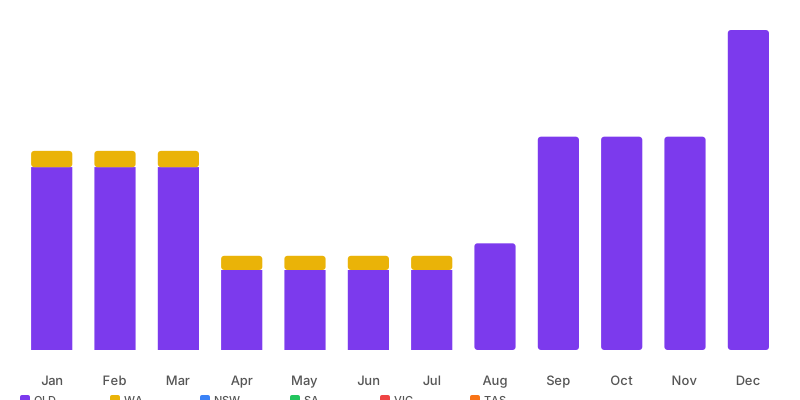
Yellow pawpaw is available year-round in Australia, with the best supply coming out of Queensland from spring through to late summer, roughly September to February. Queensland grows about 91% of the national crop, with production peaking in December and January when the warm, wet conditions that pawpaws love are in full swing. If you're buying outside that window, you'll still find fruit on the shelf, but the peak-season fruit from North Queensland is noticeably sweeter and more fragrant.
When is Pawpaw Season in Australia?
Pawpaw is in season across summer and spring in Australia, with peak supply from September to March.
The pawpaw (Carica papaya) is closer to a giant herb than a tree, with a hollow soft-wooded trunk, and commercial orchards reach cropping stage in nine to twelve months from seed. Trees produce well for just two to three years, so growers replant each season to maintain continuous supply, per NT DAF (1998). There are three plant types. Female, male and hermaphrodite are each distinct in fruiting behaviour. Female trees need a male pollinator at a ratio of no less than one male to ten females. Hermaphrodite trees self-pollinate but produce elongated “long tom” fruit rather than the round-to-oval shape retailers prefer. Yellow-fleshed dioecious varieties dominate commercial Queensland plantings, per QLD DPI (2000). Good drainage is non-negotiable. Root rot (Phytophthora) is the most commercially damaging disease, so Queensland growers plant on raised mounds, with optimal soil pH between 6.0 and 6.5.
Pawpaw Availability by Season
Where does Pawpaw Come From in Australia?
Yellow pawpaw is grown almost entirely in Queensland's tropical and subtropical zones. The main production areas are coastal North Queensland (around Innisfail and the Atherton Tableland), central Queensland and south-east Queensland. Dioecious yellow hybrids 1B, 11B, 13 and 14 dominate in the north and centre. Richter Gold and PG selections are used on the Atherton Tableland and in south-east Queensland, per QLD DPI (2000). Western Australia produces a small year-round supply around the Gascoyne region near Carnarvon and the Kimberley around Kununurra. The NT contributes modest volumes around Darwin and the Top End, constrained by the short productive life of the trees and the dry season gap, per Buy West Eat Best (2025) and NT DAF (1998).