

Pumpkin Season
Pumpkin in season in Australia. Month-by-month availability by state, peak supply windows, growing regions and varieties.
When is Pumpkin in Season?
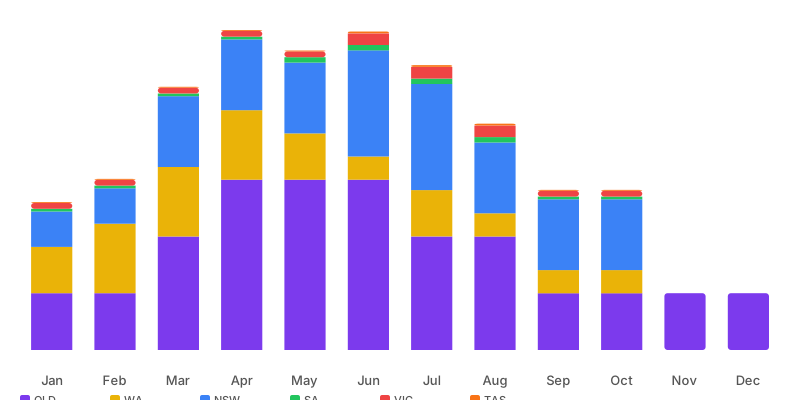
Pumpkin is available year-round in Australia, but peak supply runs from April through to August when the bulk of the Queensland and NSW harvests are coming in. The winter months are when you'll find the best prices and the widest choice of varieties. January and February are the thinnest months on shelves, when the previous autumn's crop has largely moved through and the new season is still getting started.
When is Pumpkin Season in Australia?
Pumpkin is in season across autumn and winter in Australia, with peak supply from March to August.
Pumpkins are planted in spring and take 12 to 16 weeks to reach maturity. They need at least 22°C to grow well, so southern-state commercial production is concentrated in the warmer months while Queensland grows almost all year round. Most growers direct-seed into raised beds under black plastic mulch to conserve moisture and hold soil warmth. Whole pumpkins cure and store well in a dry, airy space for several months without refrigeration, which is part of what makes them so reliable on the shelf year-round. Growers can release fruit gradually rather than flooding the market at once, per ABC Rural. Once cut, use within five days.
Pumpkin Availability by Season
Pumpkin Varieties
Three types cover nearly all Australian retail pumpkin. Jap/Kent (around 50% of production) has mottled green skin and reliable sweetness. Butternut has a beige bell shape, peels easily and is available year-round from Queensland and the NT. Grey types like Queensland Blue are large with pale blue-grey ribbing, store exceptionally well and peak from late summer through autumn.
Pumpkin Varieties Through the Year
Butternut Pumpkin Season
Butternut is available year-round, easing in February and March before building again from April through August. Technically a winter squash (Cucurbita moschata) rather than a true pumpkin, though Australians use it interchangeably. The modern cultivar was developed in 1940s Massachusetts by crossing a pumpkin with a gooseneck squash, per Wikipedia. Thin beige skin is easy to peel. The flesh is deep orange and sweet. It doesn't store quite as long as the harder-skinned grey types. The NT produces butternuts through its dry season, May to September, per NT DAF.
Grey Pumpkin (Queensland Blue) Season
Grey pumpkins (sold as Queensland Blue or Jarrahdale depending on region and shape) are the large, pale blue-grey ribbed pumpkins at greengrocer displays and farmers markets from late summer through to mid-winter. Peak supply is February to April. They belong to Cucurbita maxima. The flesh is dense, deeply orange and holds its shape well when roasted. The Queensland Horticulture Institute released 'Dulong QHI' in the late 1990s, a virus-resistant grey-skinned cultivar from HRDC project VG96010, per AUSVEG/QHI. Grey pumpkins store exceptionally well whole, keeping for months in a cool, airy spot.
Jap/Kent Pumpkin Season
Jap (also sold as Kent) is what most Australians picture when they think of a pumpkin. Round, mottled dark-green-and-yellow skin, dense flesh, reliable sweetness. It's been the dominant commercial variety for decades, accounting for around 50% of fresh pumpkin production by volume, per QLD DAF. Classified as Cucurbita maxima. The name "Jap" comes from its Japanese origin, and "Kent" is an alternative retail name. Average fruit weight is 3 to 4 kg. Ken's Special hybrid is one of the main commercial selections, valued for higher yield and earlier maturity, per NT DAF. Peak supply runs from April through July when Queensland's main harvest is in full swing.
Where does Pumpkin Come From in Australia?
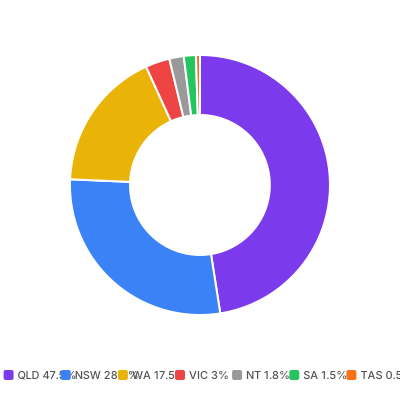
Pumpkins were among the seeds brought out on the First Fleet in 1788. The plant itself originates from Central America, where it has been cultivated for more than 8,000 years, per ABC Gardening Australia. The three main commercial species are Cucurbita maxima (grey/Jarrahdale types and Queensland Blue), Cucurbita moschata (butternut) and Cucurbita argyrosperma, though in everyday use they're all just pumpkin. Queensland dominates national production at around 47.5% in 2024/25, with the key harvest from April through August. NSW contributes about 28%, Western Australia around 17.5%, and the rest is split between Victoria, the NT, SA and Tasmania, per Hort Innovation. In 2013/14 the variety breakdown was approximately 50% Kent/Jap, 31% butternut and 17% Queensland Blue, per QLD DAF.
Pumpkin Production in Australia
Hort Innovation records around 117,000 tonnes of pumpkin produced in 2024/25 worth approximately $110 million at the farm gate. Production has held between 113,000 and 121,000 tonnes for the past decade while farm-gate value has roughly doubled from $58 million in 2014/15. About 60% of Australian households buy pumpkins in a given year, per ABC Rural. Supply can be volatile. Flooding in Queensland and northern NSW periodically cuts supply and lifts retail prices, and in mid-2024 supermarket prices hit around $4 per kilogram while some SA growers were receiving as little as 60 cents. A glut of red wine grapes has also pushed more SA growers into pumpkin as a cash crop, adding further supply pressure.