

Sweet Potato Season
Sweet Potatoes in season in Australia. Month-by-month availability by state, peak supply windows, growing regions and varieties.
When are Sweet Potatoes in Season?
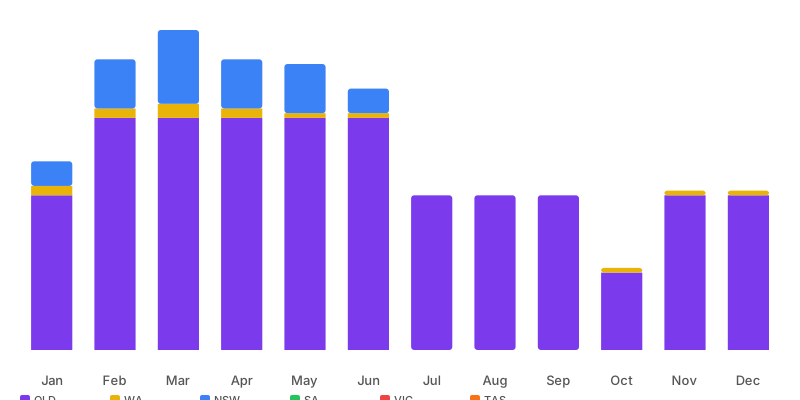
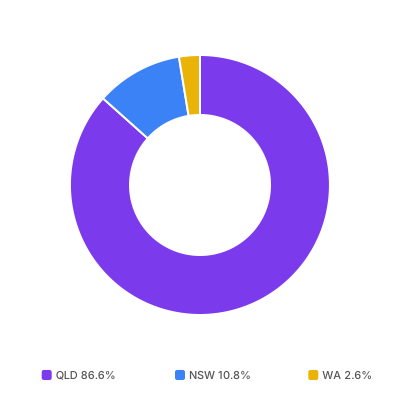
Sweet potato season in Australia is effectively year-round, but the strongest supply runs from February to June as Queensland's main crop comes through. Queensland grows around 87% of the national crop, so the supermarket shelf is rarely bare. The best value and freshest eating quality usually land in late summer and autumn, when new-season roots are moving out of Bundaberg and other warm growing districts.
When is Sweet Potato Season in Australia?
Sweet Potatoes are in season across autumn and summer in Australia, with peak supply from February to June.
Sweet potato (Ipomoea batatas) is a warm-season vine in the morning glory family, not a true potato. Queensland DPI research by Deuter and Carey puts the lower soil-temperature threshold at about 18°C, with most varieties needing a frost-free season of 17 to 25 weeks, which is why tropical Queensland can plant and harvest through most of the year while cooler southern growers usually plant in late spring for an autumn harvest. Growers plant vine cuttings called slips into raised mounds of well-drained sandy loam. The storage roots develop over four to six months. Skin damage matters at harvest. A scratched sweet potato doesn't keep as well, which is why freshly dug roots can look a little rough even when perfectly good to eat.
Sweet Potato Availability by Season
Sweet Potato Varieties
Gold (orange-fleshed Beauregard) accounts for about 90% of Australian sales and is what you'll find year-round at supermarkets. Red (Northern Star) makes up most of the remaining fresh market, with Purple and White together at under 5% and confined mainly to Asian grocers and specialty shops.
Sweet Potato Varieties Through the Year
Gold Sweet Potato Season
Gold sweet potato season peaks from February to April when the fresh Bundaberg crop is in full swing. Orange-gold skin, deep orange flesh and a sweeter flavour than white-fleshed types. The main commercial cultivar is Beauregard, developed by the Louisiana Agricultural Experiment Station in 1981. Nunawading Community Gardens' variety notes put the Gold category at about 90% of Australian sales. Northern Queensland growing areas keep it available year-round after the autumn flush eases.
Red Sweet Potato Season
Red sweet potato season is strongest from March to May, with lighter supply through winter and spring. Reddish-purple skin, white or cream flesh, starchier and less sweet than gold varieties. The standard Australian cultivar is Northern Star, traced to Laloki in Papua New Guinea. AUSVEG's sweet potato variety evaluation describes it as early-maturing and high-yielding, with newer selections such as Southern Star also grown commercially. Red sweet potatoes make up roughly 8% of sales.
Purple Sweet Potato Season
Purple sweet potato is available in small volumes through most of the year, with supply thinnest in October and November. At less than 2% of Australian production, it sits firmly at the specialty end. Farmers markets, Asian grocers and well-stocked independent greengrocers are your best bet. The industry standard cultivar is WSPF (White Skin Purple Flesh), described by AUSVEG's variety work as a white-skinned type with purple-marbled flesh, released in Queensland in 2000.
White Sweet Potato Season
White sweet potato is low-volume for most of the year, with supply often tightening in November and December. Pale cream skin, white flesh, drier and less sweet than gold varieties. Found mainly at Asian supermarkets and specialist greengrocers rather than major chains. The main Australian cultivar is Kestle, which Nunawading Community Gardens' variety notes describe as selected from Taiwanese material and still the principal white-category cultivar for the local fresh market.
Where do Sweet Potatoes Come From in Australia?
Bundaberg is the dominant growing district, with a federal sweet potato levy impact statement estimating it produces about three-quarters of Australia's crop. Sandy soils, irrigation and year-round warmth keep planting and harvest windows moving through most of the year. Queensland DPI's climate work identifies Rockhampton, Mareeba, Atherton and Bowen as other Queensland hubs, and Cudgen in far northern NSW as the main area outside Queensland. WA grows a smaller crop around Perth (late September to December planting for autumn harvest), Carnarvon (December to February and August to September harvests) and Kununurra. The NT Top End supports irrigated dry-season production but is not a major commercial source.
Sweet Potato Production in Australia
According to Hort Innovation's Australian Horticulture Statistics Handbook, Australian sweet potato production grew from about 69,000 tonnes in 2014/15 to 94,871 tonnes in 2024/25, with a peak of more than 106,000 tonnes in 2019/20 before easing to around 89,000 tonnes in 2023/24 and recovering the following year. Farm-gate value in 2024/25 reached $85.7 million, up from $69.6 million the year before. Exports and imports are both about 1,100 tonnes. It remains a largely local-market crop. Gold, orange-fleshed varieties led by Beauregard remain the default, though the industry has been gradually adding red, white and purple types to reduce reliance on a single line.